
Stop designing in the dark: why planning first is the smarter way to deliver faster approvals and happier clients
As planners, we can pretty quickly tell how a design has come to fruition, and the most common approach has always been design first, check planning requirements after. Typically, a client goes to their architect or designer with a detailed brief; this brief then comes to life in plans, which, when presented, the client loves and becomes set on.
It’s only when this is lodged as a DA that the planning reality becomes apparent. The setback didn't work; there was an overlay that wasn't caught early enough, and the FSR was always going to be tight. The design has to change, sometimes significantly, and a client who was thrilled a month ago is now confused about why things are going backwards.
This isn't a skills problem. It's a sequence problem. Planning has always been treated as something you deal with at the end, when it's actually an upstream constraint. This has historically made planning out to be the evil, anti-development part of the process which the industry has absorbed.
Why it made sense once
Getting planning advice early used to be slow and expensive. You couldn't justify bringing in a town planner at concept stage when you didn't even know if the project was proceeding, so planning happened last, when commitment was already highest. And this is the worst possible moment to find a problem.
The tools have changed and the turnaround times have changed. The real cost of doing it the old way, in write-offs, redesigns, and lost client trust, is far higher than most practices are properly reckoning with.
The new sequence
The designers I see genuinely thriving right now have flipped the order. Planning comes first, and design follows it, and it works in two phases.
Phase one
This is a design concept developed alongside a Preliminary Planning Report (PPR). Before significant design time is committed, one of our talented town planners assesses the site, covering zoning, permissibility, controls, overlays, and the likely approval pathway, whether that's a DA or CDC in NSW, a permit application or VicSmart in Victoria, or an MCU in Queensland. All of it is documented and ready to present alongside your concept. At Planna, we turn PPRs around in just a few days, which is fast enough to be genuinely useful at concept stage before anyone's committed to a direction.
The client gets the concept and the pathway in the same meeting. Not just what you've designed, but how it gets approved, and that's a completely different conversation.
Phase two
This is the lodgement document. Once the design is resolved and the pathway confirmed, the right document gets prepared, whether that's a Planning Report for the DA, which can include a Statement of Environmental Effects, or a CDC compliance report for complying development. Written by a registered town planner, signed off, and ready to lodge.
Two phases, that's the whole system.
What it looks like in practice
Tegan Hands runs Hands Studio, a multidisciplinary residential design practice. We published a case study on her work late last year and at that point, the story was about reclaiming time, managing volume, and getting the compliance burden off her plate. What's happened since is more interesting.
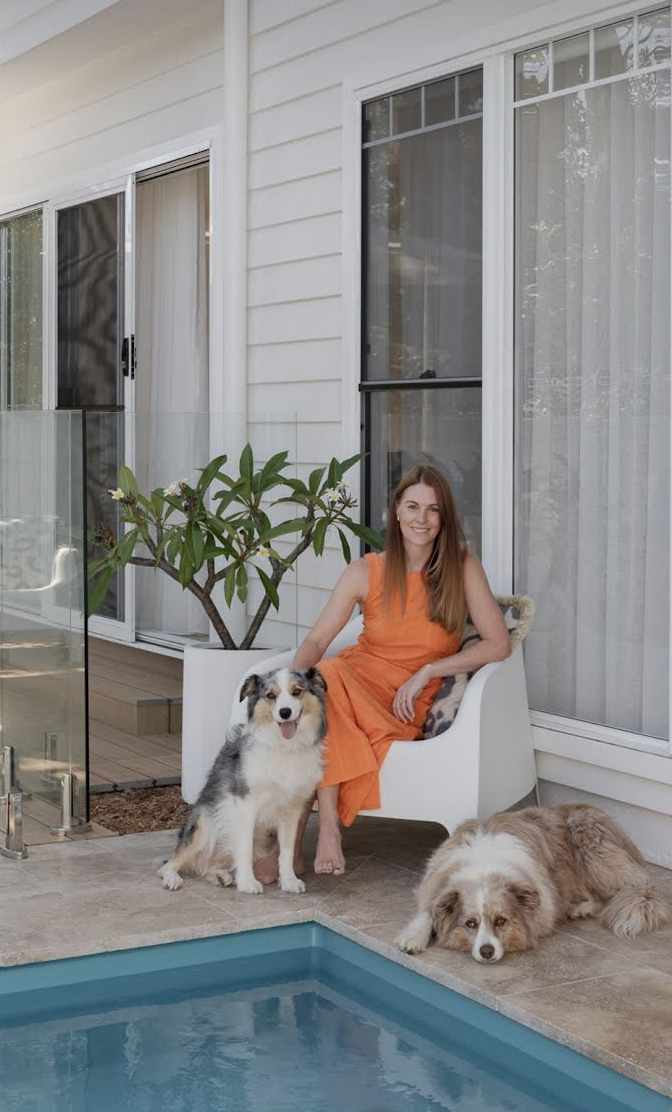
She didn't just keep using Planna as a support tool; she rebuilt her entire client process around it.
"I've changed my process to a design concept with an approval pathway report through Planna, then onto Phase 2 with SoEE or CDC compliance report. So I'll be using Planna for every project going forward."
A recent DA on a BAL29 site in Coledale, a bushfire-affected property that councils tend to look at carefully, was lodged in early January and approved within a month, with the council not making contact once.
"I was absolutely stoked. Only took a month to be approved."
That result comes from doing the planning work at the start. By the time the application hit the assessor's desk, there was nothing left to query.
Tegan is one of many clients we're now seeing adopt this model, and the pattern holds consistently across the board with fewer information requests, shorter assessment timeframes, and better outcomes for their clients.
What it actually unlocks
The time savings are real, but they're not the most important part. When you can sit down with a client and present a design alongside a clear approval pathway in the same meeting, you project a level of certainty that most of your competitors simply aren't offering, and people choose the designer who has a plan.
As Tegan recently told us,
"I have won multiple projects this month. I'm sitting at 25 projects and booked out until mid-April."
Redesigns after planning assessment are where the margin disappears and where client relationships get complicated. Take the late surprise out of the equation, and both of those problems largely go away. For a sole practitioner or small studio, the model also means you can take on more without carrying the overhead of a full-time planner on the books, with the expertise there when you need it, project by project.
And clients who understand what's happening from day one are easier to work with. They trust you, they refer you, and a lot of the expectation-setting that used to fall entirely on your shoulders gets handled upfront by the report itself.
The old way was always optional
The PPR is designed to make this sequence viable at the start of every project, not just the complex ones. And a Planning Report written and signed by a registered planner is what gets applications through without the months of back-and-forth that's become accepted as just how things are.
The designers who've made this shift spend less time writing off hours, less time managing clients through unexpected redesigns, and more time doing work that actually moves forward. Their clients feel it too, coming into the process with clarity rather than confusion, and that trust is what turns a good project into a referral. None of it requires doing anything fundamentally different, just doing it in the right order.
Reach out if you'd like to talk through how this could work for your practice, always happy to chat.
Read more


