
Noah’s Backpackers: why even iconic sites can fail without feasibility
What Noah’s Backpackers really shows
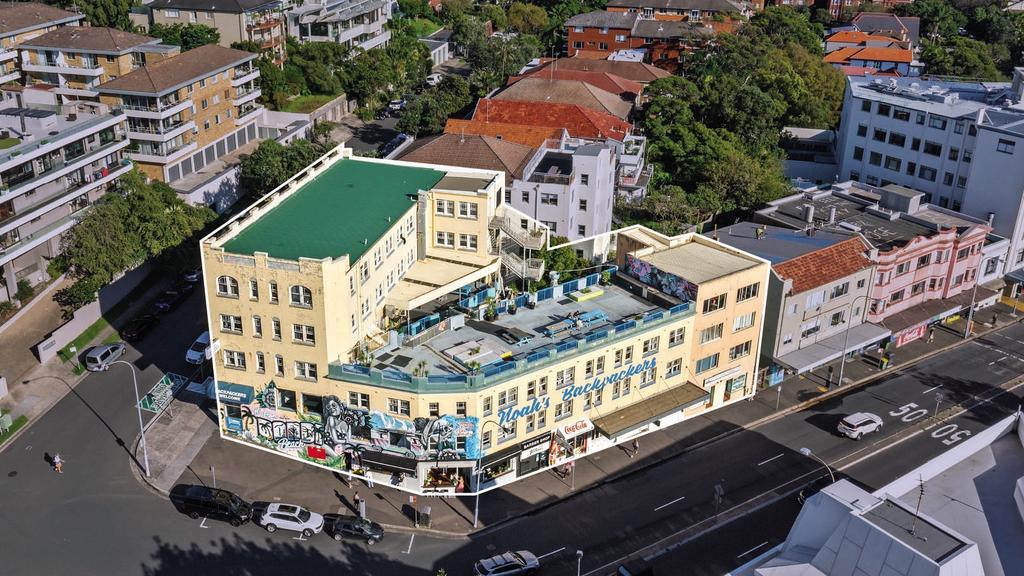
The recent sale of Noah's Backpackers at 2-8 Campbell Parade, Bondi Beach (The Site) highlights a persistent misconception in property development: that prime location equals planning simplicity. A Beachfront address, iconic positioning and long standing use create an assumption that redevelopment potential must be obvious.
In reality, the opposite is usually true.
The more prominent the Site, the more layered and politically sensitive the planning framework becomes. Visibility attracts competing objectives such as economic activation, housing supply, heritage sensitivity, coastal character, residential amenity and tourism regulation. All of which converge on the same parcel of land. The result is not clarity. It is complexity.
Noah's Backpackers is a strong reminder that even well researched, high-profile sites require a deeper feasibility lens. Not because the controls are hidden, but because the opportunity often sits in how those controls are interpreted.
Why even researched sites deserve a second look
The Site itself presents a classic example of layered planning logic. It is split between E1 Local Centre zoning along Campbell Parade and R3 Medium Density Residential zoning to the rear on Francis Street. On paper, the framework appears straightforward: higher intensity at the commercial frontage and more restrained outcomes toward the residential interface.
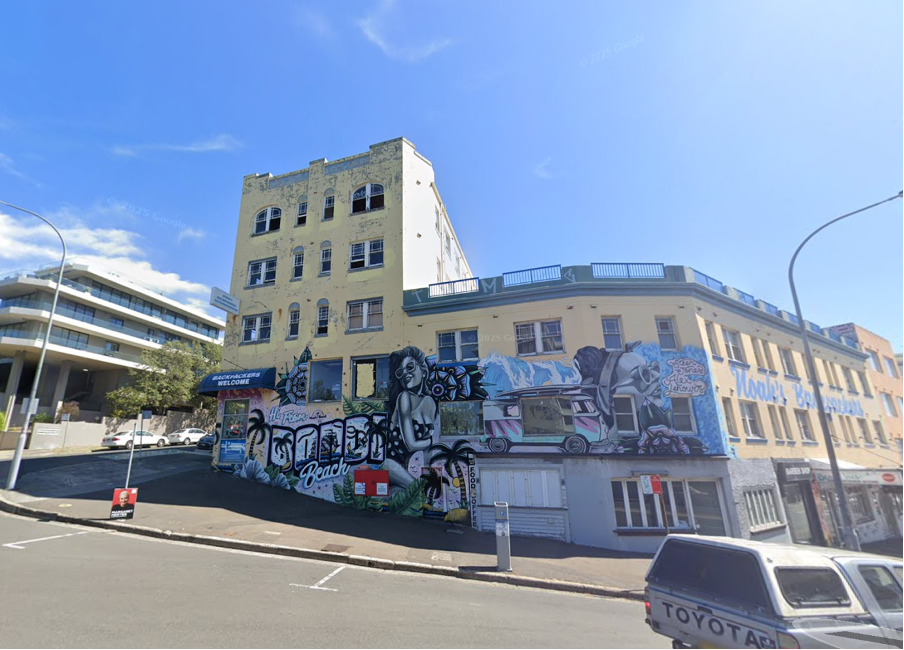
But the existing built form complicates that narrative. The building steps upward toward the rear due to elevated natural ground levels and legacy approvals, meaning the bulk and scale already present on the R3 portion exceed what current controls might ordinarily contemplate. In practical terms, the physical reality of the site does not neatly align with today’s written planning envelope.
This disconnect is where strategic feasibility becomes critical.
A conventional planning review may document the height limits, floor space ratios and permissibility distinctions and treat them as fixed constraints. A more strategic assessment asks a different set of questions. Does the established built form create a defensible precedent? Can the character of the rear portion support an argument for a contemporary interpretation of scale? Are there grounds to test variations in a way that remains consistent with planning intent while unlocking additional yield?
These questions are not speculative. They are commercially material.
The compliance barriers that invite creative solutions
The zoning interface also shapes how use can be structured across the land. While the E1 portion permits certain centre-based and accommodation uses, the R3 zone is housing-focused and restricts many forms of tourist or visitor accommodation. At first glance, this appears limiting. However, accommodation definitions and operational models are not always as rigid in practice as they read in legislation.
The difference between a hostel, a hotel, shop top housing or another accommodation category can determine whether consent is achievable at all. The way a proposal is framed can materially influence assessment outcomes. A feasibility that simply states that it’s permitted or prohibited , without testing the nuance of definition or precedent, risks underestimating what may actually be achievable.
This is where many prime sites lose value. Not because they are over-constrained, but because they are interpreted conservatively.
In competitive acquisition environments, conservative assumptions can suppress yield projections, distort valuation and influence bidding strategy. Developers may walk away from sites that are in fact viable or alternatively proceed based on incomplete understanding of risk. The cost of getting feasibility wrong is rarely visible upfront, but it often manifests later in redesign, protracted negotiations or stalled approvals.
Strategic feasibility should not merely catalogue controls. It should interrogate them.
What we do
At Planna, our approach extends beyond identifying what the planning framework says. We examine how similar controls have been applied in recent approvals, whether built form precedents support variation arguments, and how zoning interfaces can be structured to optimise outcome while maintaining compliance integrity. We analyse the interaction between character, transition and use in a way that connects planning strategy to commercial intent.
Equally important is timing. Planning interpretation evolves. Council expectations shift. What was considered acceptable six months ago may no longer reflect current appetite. Early clarity allows developers to move with confidence while flexibility still exists in acquisition negotiations and funding discussions.
A Preliminary Planning Report should function as a capital decision tool. It should clarify risk, identify realistic approval pathways and test alternative scenarios before significant investment is locked in. On complex sites, speed and strategic interpretation matter as much as technical accuracy.
The broader lesson from Noah’s Backpackers is not that the site is uniquely complicated. Across Sydney, many high-value locations share similar characteristics, split zoning, legacy-built form inconsistencies, heritage overlays, interface sensitivities and layered permissibility rules. The opportunity often lies in the tension between the written controls and the existing context.
Prime sites do not fail because they are complex. They fail when that complexity is reduced to a checklist.
Good feasibility does not slow projects down. It ensures that the project being pursued is the right one, the version that aligns planning strategy with commercial ambition.
On prominent sites, especially, the greatest risk is not constraint, it is the assumption.
Read more


