
Bunnings “tiny homes” are affordable and convenient, but do they still require council approval?
So, Bunnings is now selling "tiny homes"...
That sentence alone says a lot about where Australia’s housing market is sitting right now. When a retailer best known for weekend renovations and sausage sizzles steps into the housing business, it’s not a side venture. It’s a signal.
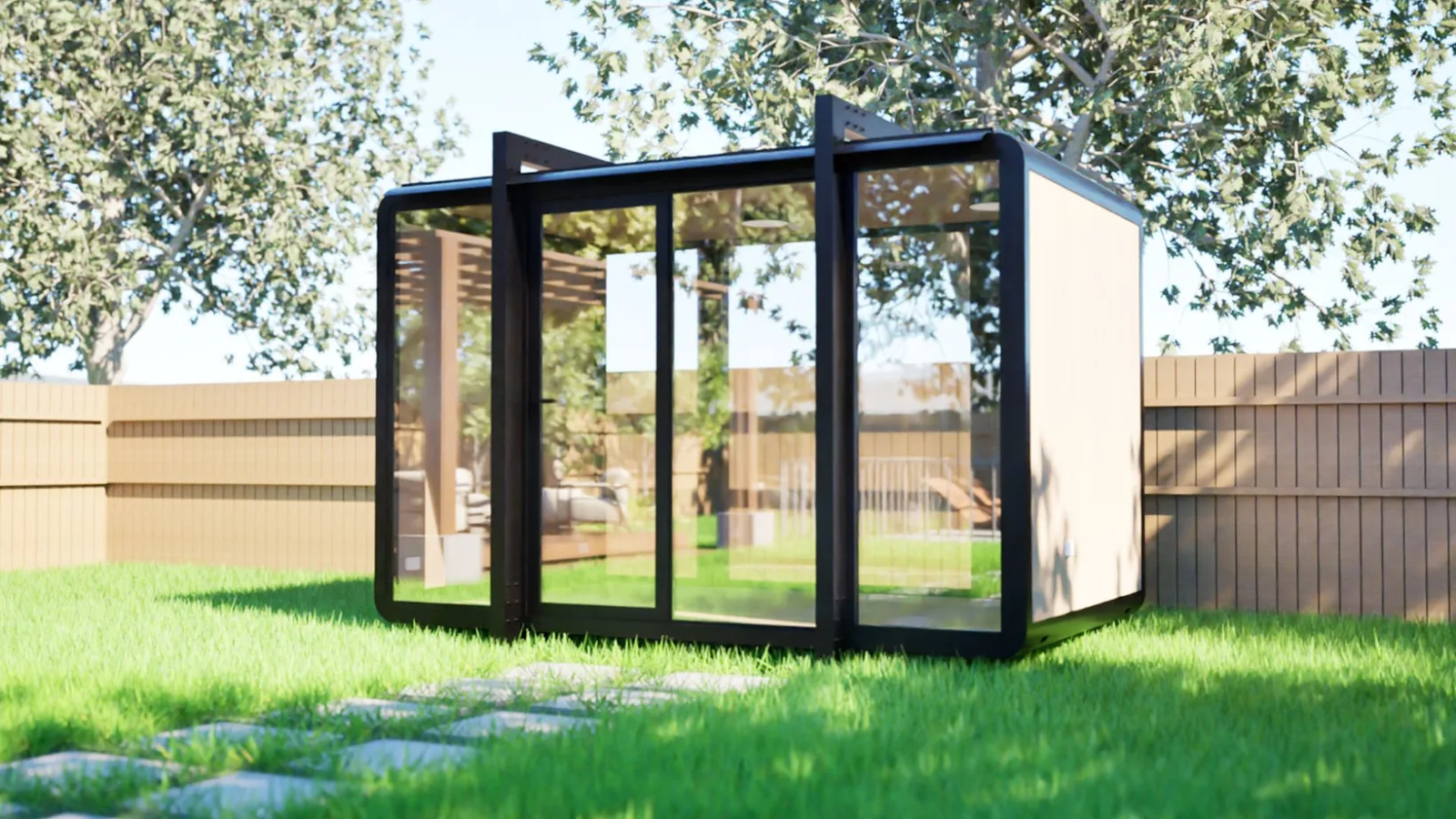
Flat-packed, prefabricated tiny homes are now available to purchase off the shelf at Bunnings. These aren’t conceptual renders. They are real, insulated structures with pre-fabricated panels, eaves, waterproofing systems, double-glazed glass windows, and high-level soundproofing.
Prices start at around $26,100 for a compact 2.7m by 2.4m unit, with larger 4m by 2.4m studio models priced at $42,900. For many households, that price point feels almost unreal when set against current property values.
From a planning perspective, this shift is significant.
Why pre-fab homes make sense right now
Recent reporting by the Australian Broadcasting Corporation highlighted that six major Australian cities, including Sydney, Melbourne, Brisbane, Adelaide, Canberra, and Perth, have all joined the ‘million dollar club’, with median house prices exceeding $1 million and some markets pushing towards $1.7 million. Against that backdrop, it’s not difficult to see why interest in smaller, faster, more affordable housing solutions is growing.
Pre-fab homes are not a gimmick. In the right context, they solve real problems. For many, they create options that did not previously exist: a granny flat for ageing parents, a home for growing children separate from the main dwelling, or even a stepping stone into independent living.
They are timely. They are practical. They are needed. But the real question is not whether you can buy a tiny home. You can. It’s whether you can put it where you want to put it.
They also align with broader conversations around gentle density. Adding a small, well-designed secondary dwelling to an existing lot can increase housing supply without fundamentally changing neighbourhood character. In the right locations, that is a positive planning outcome.
It is also true that prefabricated homes have advantages in the approvals process. When a design has been assessed multiple times and refined in response to council feedback, the pathway can become more predictable. Standardised plans remove some of the uncertainty that comes with bespoke builds.
In some jurisdictions and under certain thresholds, these structures may not require a full building permit. That is where headlines can become misleading.
The approval question every buyer is asking
The structure itself is only part of the equation. Planning approval is rarely about the product alone. It is about the product in a specific location.
Zoning matters. Lot size matters. Setbacks matter. Parking matters. Overlooking and overshadowing matter. Bushfire risk, flooding, acoustic exposure, and heritage constraints all matter.
We recently assisted with a matter involving the proposal of a tiny home adjacent to a highway. On paper, it looked compliant in many respects. However, the council ultimately rejected the proposal due to insufficient noise attenuation. The insulation and glazing did not meet the acoustic requirements for that specific site context.
The lesson is simple. You can purchase the pod, but you cannot separate it from the land it sits on.
All secondary dwellings, including tiny homes, still require either a a Compling Development Certificate (CDC) or a Development Application pathway. They are regulated, assessed, and can be refused.
It is not one national rulebook
Another common misconception is that there is a single set of “tiny home rules” across Australia. There is not.
In New South Wales, for example, complying development for a secondary dwelling generally needs to satisfy several core tests. The lot typically must meet a minimum size threshold of 450 square metres. As well, under CDC, the secondary dwelling’s gross floor area is capped at 60 square metres, however if you move into a full Development Application process, that size can increase, but the level of scrutiny also increases.
Queensland presents a different picture. Tiny homes are not explicitly defined in the same way under the state planning framework. That can mean fewer specific provisions, but it does ot mean no regulation. Local planning schemes, overlays, and infrastructure constraints still apply. As products like the Bunnings pods become more common, planning frameworks will likely evolve to address them more directly.
Every state, and often every local government area, approaches secondary dwellings slightly differently. What is permissible in one suburb may be prohibited in another.
Designed once, assessed many times
The big advantage of Bunnings pods is that the design work is already done. Engineering, materials, and build details are all set. Councils will become more familiar with these models over time, which could make approvals smoother.
But there’s no automatic green light. Councils assess the land, not just the pod. Setbacks, site coverage, parking, lot size, privacy, and overlays all still apply.
The takeaway: even with a ready-made pod, whether it can actually go in your backyard depends on your site, and your council.
Before you click “add to cart.”
Bunnings backyard pods are flexible and affordable, but it’s important to remember that they are still development projects and developments still need planning approval. Approval isn’t automatic, and in most cases it requires documentation and assessment.
If you’re considering a Bunnings tiny home, the first question shouldn’t be which model to buy; it should be, do you know whether it requires a DA and if so, will council approve it?
A simple Preliminary Planning Report (PPR) can clarify feasibility and highlight any obstacles early. Check your zoning, minimum lot size, setbacks, overlays, parking, and any site-specific constraints such as acoustic, bushfire, or flood requirements. The advantage with these pods is that the design work is already done, so you’re already 10 steps ahead of most developments.
It’s a straightforward step that provides clarity upfront. So before spending $40,000 on your new home office or garden getaway, consider investing a small fraction of that to know where you stand. A PPR offers certainty early and helps avoid costly surprises later.
Ready to build your tiny home? Request your PPR from Planna now.
Read more


